
How to setup a hidden forgiveness tracker block on website
Learn how to plan, build, and launch a private forgiveness-tracker block on a webpage that safely collects apologies or forgiveness tokens. This step-by-step guide explains privacy, UX, no-code options, testing, and real microcopy examples so you can create a gentle, respectful healing tool.
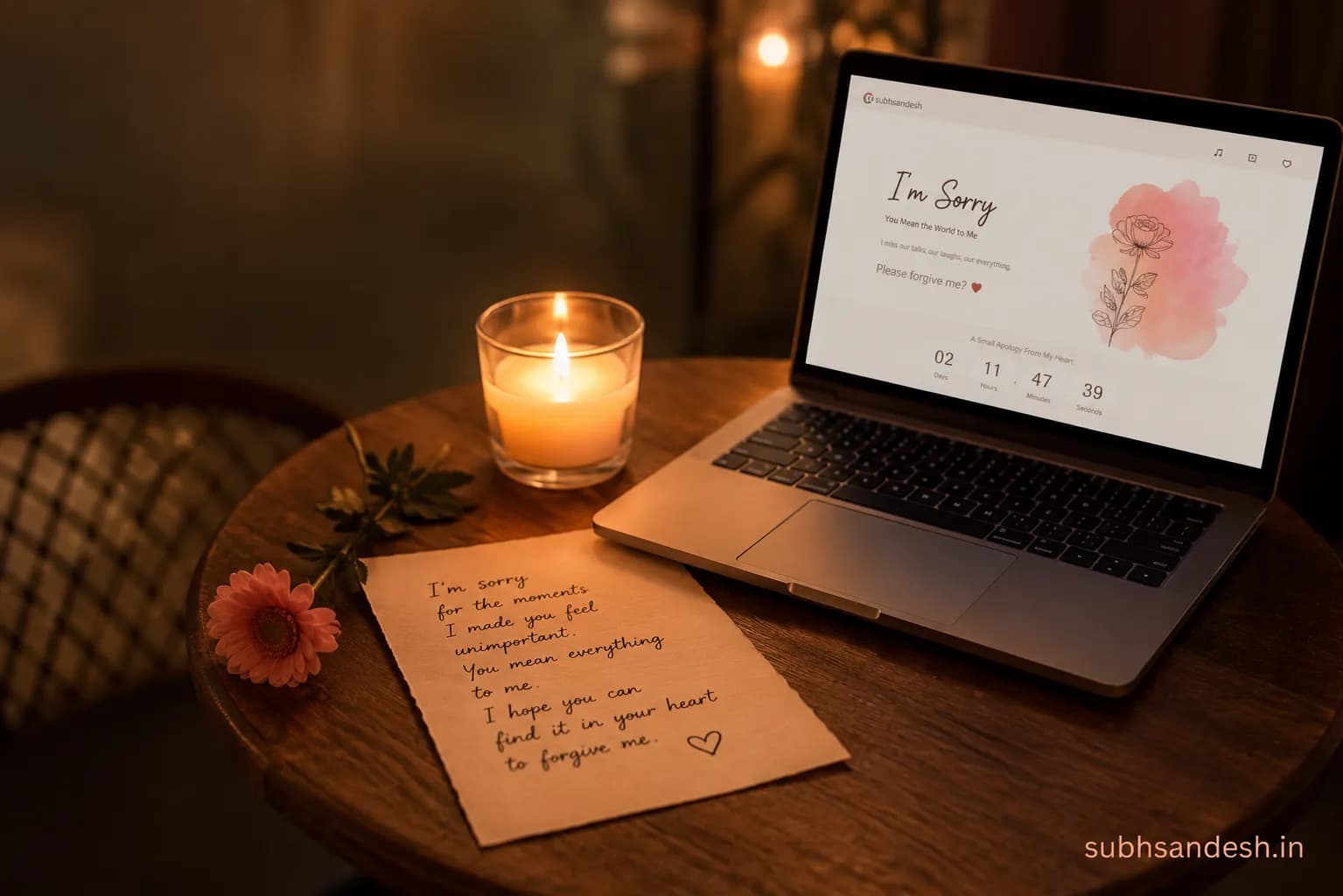
Make this into a page you can send
Photos, a message, music and a ready-to-share link — in a couple of minutes.
Create nowor browse all occasionsKey takeaways
- • A hidden forgiveness tracker is a private, respectful on-page tool that counts or collects forgiveness gestures without broadcasting them publicly.
- • Design decisions—where the block lives, who can submit, and how data is stored—determine whether the tracker feels safe and healing.
- • You can build a privacy-first tracker with no-code tools or by using SubhSandesh to create a private apology page and pair it with a simple form or built-in message block.
- • Test every reveal rule and each privacy setting on multiple devices and with a trusted friend before you open the tracker to real submissions.
- • Keep microcopy gentle, optional, and choice-driven: offer a short checkbox to forgive and let people withdraw or edit entries if possible.
On this page
A hidden forgiveness tracker block is a private, on-page tool that collects small acts of apology or forgiveness—checks, short notes, or tokens—without publishing them publicly. If you want to quietly gather signs that repair is happening and use them to open a gentle conversation, this guide shows exactly how to plan, build, test, and launch one in a privacy-forward way.
Why build a hidden forgiveness tracker on your website
People mend things in small steps. A tracker gives those steps shape: a visible counter on the back end, a private list of short messages, or a rule that unlocks a surprise when enough people respond. It’s not about public scoreboard drama. It’s about safe rituals that encourage accountability and forgiveness.
A tracker helps when you want evidence of progress but you also want to protect dignity. For example:
- You repaired a small fight and want to collect quiet apologies before a talk.
- A group needs a private way to signal remorse after a mistake.
- You’re running a restorative project that measures small acts of kindness over time.
Using a private page (a passworded or non-indexed link) means entries stay where they belong: out of public view.
When a hidden forgiveness tracker is the right choice
Not every apology needs a tracker. Choose this when:
- All participants agree to a private process.
- The aim is restoration, not shaming or punishment.
- You want a mindful ritual: small, repeatable, and respectful.
Avoid trackers if the act of collecting forgiveness could pressure or coerce people, or if the situation requires formal mediation.
What a good hidden forgiveness tracker actually does
A useful tracker is simple, respectful and clear. Typical features:
- A private submission form for one-line apologies or forgiveness tokens.
- A backend counter visible only to the organizer.
- Optional anonymization so contributors can be private.
- A reveal rule (e.g., unlock a private message after 3 submissions).
- Clear consent text and an easy way to withdraw entries.
Below is a short comparison to help choose an approach.
Tracker method comparison
| Method | Ease (no-code) | Privacy | Best for |
|---|---|---|---|
| SubhSandesh private apology page + message block | Very easy | High (private link) | Quick, heartfelt apology pages for couples or friends |
| No-code form embed (private form + hidden counter) | Easy | Medium–High (depends on service) | Small group tracking and anonymous tokens |
| Custom server-backed tracker | Harder | High (if implemented right) | Complex rules, large groups, or audit trails |
How to setup a hidden forgiveness tracker block on website — step-by-step
Follow these practical steps. They’re written for someone who prefers no-code tools but want complete control over privacy.
- Decide the purpose, privacy level, and reveal rules
Start by answering three questions in writing: What are we tracking? Who can submit? What happens when the tracker hits a target?
- Purpose example: "Collect three sincere acknowledgements so I know my sibling is ready to talk."
- Privacy rule example: "Only the organizer sees submissions; contributors may be anonymous."
- Reveal rule example: "When counter = 3, I’ll open a private chat and share a written note."
Writing these down reduces confusion later and keeps the experience gentle.
- Choose the page and placement for the tracker
Pick a private page location that feels discreet. Options:
- A private apology template on SubhSandesh (ideal for relationship-focused pages).
- A password-protected or unlinked page on your website.
- A subpage only shared with invited people.
If you want a soft, relationship-first layout, try a ready-made apology page like https://subhsandesh.in/sorry-gf or https://subhsandesh.in/sorry-friend to host the tracker.
- Pick a no-code method to collect entries (no programming required)
You have three mainstream no-code choices:
- Use built-in message or guestbook functionality on a private page (fastest).
- Add an embeddable private form from a form-builder that supports hidden responses and privacy controls.
- Use a spreadsheet-backed form that stores entries privately.
On SubhSandesh, you can create a private apology page and rely on the page’s message features or an embedded form to gather forgiveness tokens without public exposure. If you prefer external forms, pick one that lets you set response visibility and export/delete entries.
- Design the submission flow and microcopy
Design matters more than you expect. Keep the form short and optional. A good structure:
- Short instruction line: "If you’d like to offer a small apology or forgive, please leave one short note. This stays private."
- One-line input field for a message (max 200 characters).
- Optional checkbox: "I give permission for this note to be used in a private reconciliation conversation."
- Submit button labeled gently: "Send" or "Offer" rather than "Submit."
Sample microcopy templates:
- Invitation: "If you feel ready, type a short note—one sentence is enough."
- Anonymous option label: "Send anonymously (recommended)."
- Consent text: "I understand my note stays private and can be deleted on request."
- Configure reveal rules and notifications
Decide what happens when the tracker reaches a target. Options:
- Manual reveal: you receive a notification and decide when to open the conversation.
- Automatic soft reveal: when the counter reaches the goal, an automated private thank-you message is sent to contributors (if the form supports private replies).
- Unlock content: a private message or recording becomes visible to you only.
Keep automatic actions modest—restoration is human work; automation should help, not replace, the emotional step.
- Test the tracker with trusted people and devices
Testing prevents accidental public exposure. Create test submissions, confirm that:
- Entries land in the private inbox or spreadsheet.
- The counter increments as expected.
- No public pages show the submissions.
- Email notifications (if any) go only to the organizer.
Ask a friend to test anonymously and check mobile, since many visitors will use phones.
- Launch carefully and explain expectations
When inviting people, be explicit and kind. Example invite message:
"I created a private page to quietly gather small apologies and signs of forgiveness. If you’d like to share, please visit the private link and leave a short note. It’s optional, anonymous, and only I can see entries."
If you’re using SubhSandesh, share the private apology page link rather than posting it publicly: try https://subhsandesh.in/sorry-gf or https://subhsandesh.in/sorry-friend if those pages fit the tone.
- Maintain, honor, and optionally delete entries
After the tracker serves its purpose, archive or delete entries per your stated policy. Gratitude goes a long way: send a simple private thank-you to contributors or hold the conversation you promised.
Practical no-code tool ideas (privacy-first)
-
SubhSandesh + built-in message block: Quickest for relationship pages; you get a private, beautiful layout and can ask visitors to send messages that only you read. Try the apology templates like https://subhsandesh.in/sorry-gf.
-
Embeddable private form: Use a reputable form service that allows response hiding and export; insert the form into the private page’s widget area. No coding beyond pasting the embed snippet into your page builder.
-
Spreadsheet-backed form: Use a form that saves responses to a private spreadsheet. Restrict spreadsheet access to trusted accounts.
Tone, language and accessibility tips
- Use short sentences and plain words: "I’m sorry" is often better than long explanations.
- Offer an anonymous option to lower barriers.
- Keep required fields to a minimum.
- Make the submit button large and clear on mobile.
- Provide an easy way to contact you if someone is uncomfortable about their submission.
Example microcopy and templates you can copy
- Page header: "A quiet space for small steps toward repair."
- Short instruction: "Leave a short note if you’d like to say sorry or forgive. This message stays private."
- Button: "Send a short note"
- Thank-you confirmation: "Thank you. Your note is private. I’ll read it when I’m ready."
Measuring success and what to watch for
Metrics that matter:
- Number of submissions vs invited participants.
- Time between first submission and scheduled conversation.
- Qualitative notes: do messages become warmer or more specific over time?
What to avoid:
- Using the tracker to pressure people to apologise.
- Publicizing submissions without consent.
A note about ethics and safety
A hidden tracker must center consent. It’s easy to cross a line—don’t. If a situation involves abuse, power imbalance, or legal concerns, a private tracker is not a substitute for professional mediation or safety planning.
Quick checklist before you go live
- Purpose and reveal rule written down.
- Privacy settings tested.
- Device testing completed.
- Clear microcopy and consent language in place.
- A plan for reading, responding to, or deleting entries.
Final thoughts and next steps
A hidden forgiveness tracker is a small, thoughtful tool for repairing relationships when used gently and ethically. It can help you collect modest signs that change is happening, and give you the quiet evidence you need to start a healing conversation.
If you want a ready-made private apology page with a warm layout and no design work, SubhSandesh makes it simple to build a personal apology or forgiveness page in minutes—pick a template, add your message, and share the private link. Try templates designed for apologies like https://subhsandesh.in/sorry-gf or https://subhsandesh.in/sorry-friend, or browse all templates to find the right tone.
Ready to create something gentle and private? Create your free SubhSandesh page in minutes and share the link.
Frequently Asked Questions
Turn this inspiration into an unforgettable surprise
Build a page with photos, a heartfelt message, music and a ready-to-share link.
- Photos, message & music
- Ready-to-share link

Written by
Suyash Agrahari
Founder
Suyash Agrahari is a Software Engineer at HireQuotient and the founder of SubhSandesh and DrawFlow (drawflow.in). He builds AI agents and full-stack products with Next.js, Node.js, and the OpenAI and LangChain ecosystems, having shipped autonomous multi-agent systems, AI copilots, and large-scale outreach platforms — and scaled side projects from a few hundred to millions of users. He writes about AI engineering, web development, and building products that grow through SEO and organic reach.
Stay Connected
Follow SubhSandesh
New templates, festival ideas and step-by-step walkthrough videos — first on our socials.
Keep reading
Which Day Comes After Propose Day, and What Happens Now
Chocolate Day comes after Propose Day — Tuesday 9 February 2027. That is one sentence, so this page covers the four situations you are actually in on …
 Suyash Agrahari· 9 min
When to Propose a Girl to Be Your Girlfriend, and When Not To
The timing question, answered with conditions instead of a date: what has to be true before you ask, what politeness and fast replies do not prove, wh…
Suyash Agrahari· 9 minRomantic Proposal Room Decoration: What the Room Must Do
Romantic proposal room decoration, sorted by the work each setup takes and what the room allows: 7 setups with set-up and reversal times, lighting evi…
Suyash Agrahari· 9 min