
Raksha Bandhan Wishes in Punjabi Your Sibling Will Actually Read
Eight Raksha Bandhan wishes in Punjabi, each given as real Gurmukhi script, a Latin transliteration and the English meaning — plus which script to send, and why so many Punjabi rakhi wishes online are machine-translated from Hindi.
Make this into a page you can send
Photos, a message, music and a ready-to-share link — in a couple of minutes.
Create nowor browse all occasionsKey takeaways
- • Punjabi is written in Gurmukhi (Unicode block U+0A00–U+0A7F) in India and in Shahmukhi in Pakistan, so the script decision comes before the words.
- • All eight wishes below are given three ways — Gurmukhi, Latin transliteration and English meaning; the pages currently ranking give at most one of the three.
- • Expect to rewrite the wish at least once: the median SubhSandesh page sits 6.9 hours between its first save and its last edit (n=931, /love-gf).
- • 51.1% of shared pages are opened on a phone (18,497 of 36,202 views), so test the Gurmukhi on a handset before sending it.
- • Raksha Bandhan 2027 falls on Tuesday 17 August 2027; 2026 fell on Friday 28 August 2026.
On this page
- 1. The all-purpose wish for a brother
- 2. The wish for a sister
- 3. The two-line WhatsApp status
- 4. The wish for a brother living abroad
- 5. The wish for an elder brother
- 6. The wish for a cousin or a sibling by choice
- 7. The wish for the whole family group
- 8. The wish that says thank you rather than congratulations
Raksha Bandhan Wishes in Punjabi Your Sibling Will Actually Read
Below are eight Raksha Bandhan wishes in Punjabi, each written three ways: real Gurmukhi you can copy, a Latin transliteration you can read aloud, and the English meaning, so you know what you are sending. Almost nobody sends the first line they find. On SubhSandesh the median gap between a page's first save and its last edit is 6.9 hours (n=931, sampled on the /love-gf template) — people write something, walk away, and come back to change the words. And 51.1% of shared pages are opened on a phone (18,497 of 36,202 views), so the script has to render on a handset, not just on your laptop. Raksha Bandhan 2027 falls on Tuesday 17 August 2027. This page covers the wishes, the Gurmukhi-versus-Shahmukhi decision behind them, and the cases where a Punjabi wish is the wrong call.
What a Punjabi Raksha Bandhan wish actually is
A Punjabi Raksha Bandhan wish is a greeting written in Punjabi rather than translated into it, normally in Gurmukhi script and using the Punjabi name for the festival — ਰੱਖੜੀ (Rakhri), not Raksha Bandhan. That naming difference is the fastest way to tell a genuine Punjabi wish from a Hindi one run through a translator.
Gurmukhi is a script in its own right, encoded at Unicode block U+0A00–U+0A7F in Blocks-17.0.0, dated 1 August 2025. Punjabi in Pakistan is written in Shahmukhi, a Perso-Arabic script, so one sentence can look entirely different depending on which side of the border your reader learned to write.
Vocabulary matters as much as script: veer and veere mean brother, bhaji an elder brother, bhaine addresses a sister, and vadhaiyan is the Punjabi for congratulations where Hindi uses shubhkamnayein.
Eight Raksha Bandhan wishes in Punjabi, with script, sound and meaning
Each wish gives the Gurmukhi, the transliteration, the meaning and the moment to use it. All eight fit a WhatsApp message without truncation.
1. The all-purpose wish for a brother
Gurmukhi: ਵੀਰ ਜੀ, ਰੱਖੜੀ ਦੀਆਂ ਲੱਖ ਲੱਖ ਵਧਾਈਆਂ। ਵਾਹਿਗੁਰੂ ਤੁਹਾਨੂੰ ਚੜ੍ਹਦੀ ਕਲਾ ਵਿੱਚ ਰੱਖੇ। Transliteration: Veer ji, Rakhri diyan lakh lakh vadhaiyan. Waheguru tuhanu chardi kala vich rakhe. Meaning: Dear brother, a hundred thousand congratulations on Rakhri. May Waheguru keep you in high spirits. Use it when: One line for any brother, any age, respectful rather than casual. Chardi kala has no clean English equivalent, which is why it is worth sending in Punjabi.
2. The wish for a sister
Gurmukhi: ਭੈਣੇ, ਤੇਰਾ ਧਾਗਾ ਮੇਰੀ ਸਭ ਤੋਂ ਵੱਡੀ ਤਾਕਤ ਹੈ। ਰੱਖੜੀ ਮੁਬਾਰਕ। Transliteration: Bhaine, tera dhaaga meri sabh ton vaddi taakat hai. Rakhri mubarak. Meaning: Sister, your thread is my greatest strength. Happy Rakhri. Use it when: A brother replies to a sister who has already tied or posted the rakhi. Informal, hence tera rather than the polite form.
3. The two-line WhatsApp status
Gurmukhi: ਰੱਖੜੀ ਮੁਬਾਰਕ। ਮੇਰੇ ਵੀਰ ਨੂੰ ਰੱਬ ਰਾਖਾ। Transliteration: Rakhri mubarak. Mere veer nu Rabb raakha. Meaning: Happy Rakhri. May God protect my brother. Use it when: You are posting publicly rather than messaging one person. Nine words fit a WhatsApp status without truncation on a small screen.
4. The wish for a brother living abroad
Gurmukhi: ਦੂਰੀ ਬਹੁਤ ਹੈ, ਪਰ ਧਾਗਾ ਓਹੀ ਹੈ। ਵੀਰੇ, ਰੱਖੜੀ ਦੀਆਂ ਵਧਾਈਆਂ। Transliteration: Doori bahut hai, par dhaaga ohi hai. Veere, Rakhri diyan vadhaiyan. Meaning: The distance is great, but the thread is the same. Brother, congratulations on Rakhri. Use it when: Nobody is tying anything in person. It names the distance instead of pretending otherwise — the difference between a real message and a forwarded one.
5. The wish for an elder brother
Gurmukhi: ਭਾਜੀ, ਤੁਸੀਂ ਹਮੇਸ਼ਾ ਮੇਰੇ ਨਾਲ ਖੜ੍ਹੇ ਰਹੇ ਹੋ। ਰੱਖੜੀ ਮੁਬਾਰਕ। Transliteration: Bhaji, tusi hamesha mere naal kharhe rahe ho. Rakhri mubarak. Meaning: Bhaji, you have always stood beside me. Happy Rakhri. Use it when: The brother is much older, or veer would sound too familiar. Bhaji carries seniority in a way no English word does.
6. The wish for a cousin or a sibling by choice
Gurmukhi: ਖ਼ੂਨ ਦਾ ਰਿਸ਼ਤਾ ਨਹੀਂ, ਪਰ ਭੈਣ-ਭਰਾ ਵਾਲਾ ਪਿਆਰ ਪੂਰਾ ਹੈ। ਰੱਖੜੀ ਦੀਆਂ ਵਧਾਈਆਂ। Transliteration: Khoon da rishta nahin, par bhain-bhra vala pyaar poora hai. Rakhri diyan vadhaiyan. Meaning: Not a blood tie, but the sibling love is complete. Congratulations on Rakhri. Use it when: The rakhi is going to a cousin, a neighbour you grew up with, or a friend — the case most wish lists skip entirely.
7. The wish for the whole family group
Gurmukhi: ਸਾਰੇ ਪਰਿਵਾਰ ਨੂੰ ਰੱਖੜੀ ਦੀਆਂ ਲੱਖ ਲੱਖ ਵਧਾਈਆਂ। ਰੱਬ ਸਭ ਨੂੰ ਸੁਖੀ ਰੱਖੇ। Transliteration: Sare parivaar nu Rakhri diyan lakh lakh vadhaiyan. Rabb sabh nu sukhi rakhe. Meaning: A hundred thousand congratulations on Rakhri to the whole family. May God keep everyone happy. Use it when: Posting into a family WhatsApp group, where naming one sibling would read as pointed.
8. The wish that says thank you rather than congratulations
Gurmukhi: ਧੰਨਵਾਦ ਵੀਰ ਜੀ। ਹਰ ਔਖੇ ਵੇਲੇ ਤੁਸੀਂ ਸਭ ਤੋਂ ਪਹਿਲਾਂ ਆਏ। Transliteration: Dhanvaad veer ji. Har aukhe vele tusi sabh ton pehlan aaye. Meaning: Thank you, brother. In every hard moment you arrived first. Use it when: Something specific happened this year and a generic greeting would insult. Name it after the second sentence.
Gurmukhi or Shahmukhi: choose the script before the words
Send Gurmukhi to a reader raised in Indian Punjab or a Sikh household, Shahmukhi to one raised in Pakistani Punjab. Wish three in Shahmukhi reads رکھڑی مبارک، رب راکھا — the same Punjabi, a different alphabet.
Converting between the two is hard enough to be a published research problem: Gurpreet Singh Lehal and Tejinder Singh Saini presented Conversion between Scripts of Punjabi: Beyond Simple Transliteration at COLING 2012 in Mumbai, and the title is the finding — a character-for-character swap does not produce readable Punjabi.
The online imbalance has a cause. Asher John's 2015 Ball State University thesis, Ideology, language attitudes and status of Punjabi in Pakistan, reports that Punjabi is the language of 44% of Pakistanis yet holds no official status and is absent from education and government, from interviews with 96 speakers in Sahiwal district and Lahore. A language kept out of schooling produces little written material online — which is why almost every Punjabi rakhi wish you find is Gurmukhi.
How the four ways of sending a Punjabi rakhi wish compare
This compares what the recipient ends up holding, not how nice the wish sounds.
| How you send it | What the recipient actually receives | Works if they cannot read Gurmukhi | Time, and SubhSandesh data |
|---|---|---|---|
| Plain WhatsApp text | Live, selectable Gurmukhi they can copy or translate | No, unless you paste the transliteration too | Under 1 minute |
| An image from a wishes site | Pixels — the words cannot be copied, searched or read aloud | No | Under 1 minute |
| A voice note in Punjabi | Nothing to read, everything to hear | Yes, and better than text | 30 seconds |
| A personalised shareable page | Live text, transliteration and photos on one link | Yes, if you include the transliteration | Median 6.9 hours of on-and-off editing; 99.4% of started pages get published and shared (2,956 of 2,973) |
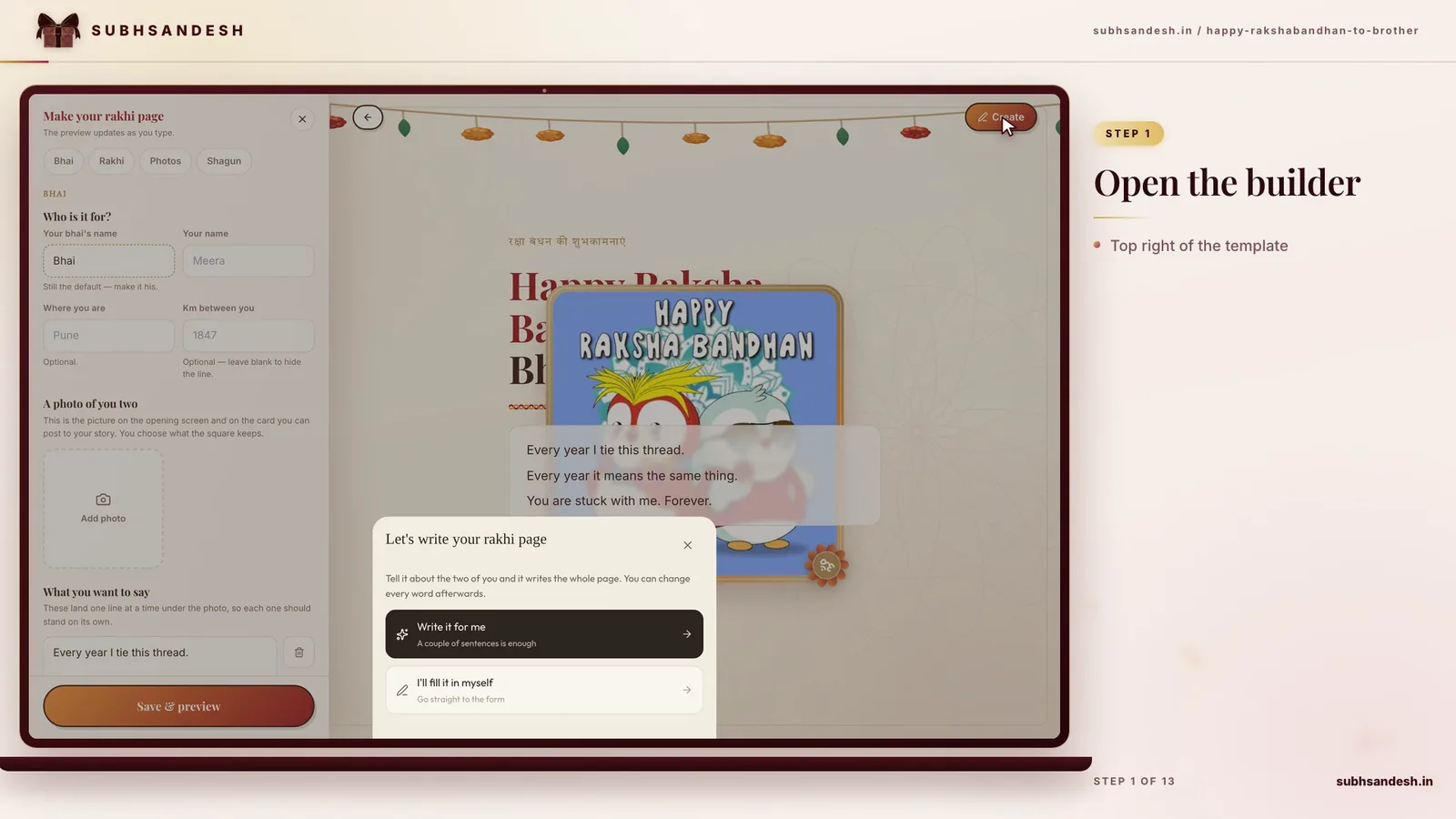
The takeaway is narrow: text beats an image whenever the reader might need to translate it, and a voice note beats both whenever the reader speaks Punjabi but cannot read it. For the words, the transliteration and a photo on one link, the Raksha Bandhan page for a brother is built for that.
Why so many Punjabi rakhi wishes online read wrong
We read the pages ranking for this query on 25 August 2026. One top result is an abandoned domain now listed for sale. Another delivers its Punjabi wishes entirely as JPG and PNG images, so the text cannot be copied, translated or read aloud by a screen reader. A third still carries the 2021 festival date in its body copy.
More telling is the language. Several of those pages carry Punjabi machine-translated from Hindi or English, with errors visible to any reader: one widely-copied "protective brother" line contains the Punjabi word for hens where a word about safety belongs, and another sentence breaks into a corrupted glyph cluster mid-word.
There is a structural reason. Punjabi is a genuinely low-resource language for machine translation. PunGPT2, released in August 2025, is described by its authors as the first fully open-source Punjabi generative model suite, trained on a 35GB corpus with a tokenizer built for both Gurmukhi and Shahmukhi — having to assemble that from scratch tells you how little clean Punjabi text existed before it. The shift is not new: Mukul Saxena's 1995 York thesis on Panjabi Hindus in Southall studied Punjabi maintenance and shift in a diaspora community three decades ago.
So read any Punjabi wish aloud before sending it. If it does not sound like something your family would say, it was translated, not written.
When a Punjabi wish is the wrong choice
If your sibling speaks Punjabi but cannot read Gurmukhi — common among second and third generation families in Canada, the UK and Australia — a Gurmukhi message is a puzzle, not a greeting. Send the transliteration, or send a voice note and skip text altogether.
Skip it too if the recipient's phone is old enough to render Gurmukhi as boxes. Rare on current Android and iOS, but it happens, and you will not see it from your own handset — send yourself the message first.
If you are in the same house, put the phone down. A thread tied in person beats anything on this page.
Where SubhSandesh loses: if you want a physical rakhi arriving in a box, a link is no substitute. Where it wins is this post's exact case — a sibling far away, a message you want right, and a script they may need help reading. Put the Gurmukhi, the transliteration and a photo on one private link; 44.2% of creators password-protect the page before sharing it (1,315 of 2,973). Browse the full template set if a plain rakhi page is not the shape you want.
Sources
- Unicode, Inc. — Blocks-17.0.0.txt, 1 August 2025: Gurmukhi occupies U+0A00–U+0A7F. https://www.unicode.org/Public/UNIDATA/Blocks.txt
- Lehal and Saini, "Conversion between Scripts of Punjabi: Beyond Simple Transliteration", COLING 2012: Posters, 633–642, December 2012. https://aclanthology.org/C12-2062/
- John, "Ideology, language attitudes and status of Punjabi in Pakistan", PhD thesis, Ball State University, 17 July 2015. http://cardinalscholar.bsu.edu/handle/20.500.14291/199826
- Singh and Thakur, "Quantum-RAG and PunGPT2", arXiv:2508.01918, 3 August 2025. https://arxiv.org/abs/2508.01918
- Saxena, "A sociolinguistic study of Panjabi Hindus in Southall: language maintenance and shift", PhD thesis, University of York, 1995. https://etheses.whiterose.ac.uk/21070/
Frequently Asked Questions
Turn this inspiration into an unforgettable surprise
Build a page with photos, a heartfelt message, music and a ready-to-share link.
- Photos, message & music
- Ready-to-share link

Written by
Suyash Agrahari
Founder
Suyash Agrahari is a Software Engineer at HireQuotient and the founder of SubhSandesh and DrawFlow (drawflow.in). He builds AI agents and full-stack products with Next.js, Node.js, and the OpenAI and LangChain ecosystems, having shipped autonomous multi-agent systems, AI copilots, and large-scale outreach platforms — and scaled side projects from a few hundred to millions of users. He writes about AI engineering, web development, and building products that grow through SEO and organic reach.
Stay Connected
Follow SubhSandesh
New templates, festival ideas and step-by-step walkthrough videos — first on our socials.
Product guide
See it built, step by step
Keep reading
Thala Deepavali: A Couple's First Deepavali at the Bride's Home
Thala Deepavali is a Tamil couple's first Deepavali after marriage, at the bride's home. In 2027 it is Thursday 28 October, oil bath 4:40–6:01 AM in C…
 Suyash Agrahari· 9 min
Sugar-Free Diwali Sweets: Swaps, Label Warnings and the Evidence
Five original no-added-sugar Diwali sweets, why jaggery and honey do not count, the warnings FSSAI requires on a sugar-free box, and what an Indian su…
Suyash Agrahari· 9 minShort Diwali Quotes: 34 Original One-Liners Under 10 Words
34 original short Diwali quotes, each under ten words and marked with its word and character count, grouped by mood: lamps, family, friends, gratitude…
Suyash Agrahari· 9 min