
Love Letter for Girlfriend in Telugu You Can Actually Send
Six complete Telugu love letters for a girlfriend - first letter, long distance, after a fight, birthday, just because, and a two-line one - each in Telugu script, romanised Telugu and plain English, with data from 3,335 SubhSandesh pages.
Make this into a page you can send
Photos, a message, music and a ready-to-share link — in a couple of minutes.
or browse all occasionsKey takeaways
- • The “I love you” page is SubhSandesh's most-created page type: 975 of 3,335 pages, 29.2% of everything built since 2026-03-12.
- • Dewaele's 2008 survey of 1,459 multilinguals found 45% felt “I love you” strongest in their first language, while 354 - a quarter - felt it stronger in a later-learned one.
- • Send romanised Telugu if you speak Telugu but type in English: no keyboard setup, and nothing to break on the 50.3% of pages opened on a phone.
- • People treat these as drafts, not messages - the median gap between first save and last edit on an “I love you” page is 6.9 hours across 975 pages.
- • 42.9% of creators password-protect the page before sharing it (1,432 of 3,335), which for a Telugu letter usually means shared phones.
On this page
Love Letter for Girlfriend in Telugu You Can Actually Send
A Telugu love letter works best short, specific, and written the way you actually speak — not translated out of English. Below are six complete letters in Telugu script, each with a romanised version for couples who speak Telugu but type in English, and a short English gloss so you know exactly what you are sending.
The "I love you" page is SubhSandesh's most-created page type — 975 of 3,335 pages, 29.2% of everything built since 2026-03-12 — and on those pages the median gap between first save and last edit is 6.9 hours (n=975), which says people rewrite these letters rather than paste them. 42.9% add a password before they share. The rest of this page covers which script to send, and what happens to the letter afterwards.
What a Telugu ప్రేమలేఖ actually is
A ప్రేమలేఖ (prēmalēkha) is a love letter in Telugu: prēma is love, lēkha is a written letter. It is almost never paper any more — it is a WhatsApp message, a shared page, or a screenshot.
Telugu romance reads as sincere when it names one concrete thing — a voice note played three times, an unanswered "అన్నం తిన్నావా?" — and filmy the moment it reaches for grand vocabulary.
That is why every letter below is under 60 words.
Why it lands harder in Telugu than in English
Jean-Marc Dewaele surveyed 1,459 adult multilinguals speaking 77 different first languages and asked which language "I love you" felt strongest in. 642 — 45% — named their first language; 419 said it was equal across languages, and 354 said a later-learned language felt stronger.
The effect is real without being universal, and it shows up in the body too. A 2019 pupillometry study in PLOS ONE tested 96 people and found pupils dilated reliably more for high-arousal words in the first language than the second, while word recognition sat at 98% in both — so it is not a comprehension gap.
Memory behaves the same way. In a 2017 Frontiers in Psychology experiment with 32 late Spanish/English bilinguals, the recall boost emotional words normally give was stronger in the first language and largely absent in the second.
6 love letters for your girlfriend in Telugu, in script and romanised
Replace the bracketed name and swap in one true detail. The detail is the letter; the rest is scaffolding.
1. మొదటి ఉత్తరం — the first letter
ప్రియా,
ఇది చెప్పడానికి నాకు చాలా రోజులు పట్టింది. నువ్వు నవ్వినప్పుడు నా లోపల ఏదో కదులుతుంది — అది ఏమిటో ఇప్పటికీ నాకు సరిగ్గా తెలియదు.
నీతో మాట్లాడని రోజు ఏదో వెలితిగా ఉంటుంది. అంతే. అంతకంటే గొప్పగా చెప్పడం నాకు రాదు. నువ్వు నాకు చాలా ఇష్టం.
కావాలంటే ఆలోచించు, తొందర లేదు.
నీ, [పేరు]
Romanised: Priyā, idi cheppaḍāniki nāku chālā rōjulu paṭṭindi. Nuvvu navvinappuḍu nā lōpala ēdō kadulutundi — adi ēmiṭō ippaṭikī nāku sariggā teliyadu. Nītō māṭlāḍani rōju ēdō velitigā uṇṭundi. Antē. Antakaṇṭē goppagā cheppaḍaṁ nāku rādu. Nuvvu nāku chālā iṣṭaṁ. Kāvālaṇṭē ālōchinchu, tondara lēdu.
In English: It took me a long time to say this. A day without talking to you feels hollow. I like you a lot. Think about it, there's no hurry.
It ends without pressure, which is what most first letters get wrong. "నువ్వు నాకు చాలా ఇష్టం" is how Telugu speakers actually say it; "నేను నిన్ను ప్రేమిస్తున్నాను" is film dialogue.
2. దూరం — for long distance
ప్రియా,
ఈ రాత్రి మళ్ళీ నీ వాయిస్ నోట్ మూడు సార్లు విన్నాను. ఇక్కడ వర్షం. ఊరిలో కూడా వర్షమేనా?
దూరం అంటే కిలోమీటర్లు కాదు — ఉదయం లేవగానే నీ ముఖం చూడలేకపోవడం. అదొక్కటే నాకు కష్టం.
అయినా ఫిర్యాదు లేదు. ఎదురుచూడటం కూడా ప్రేమలో ఒక భాగమే.
వచ్చే నెల టికెట్ బుక్ చేశాను. లెక్కపెట్టు.
నీ, [పేరు]
Romanised: Priyā, ī rātri maḷḷī nī voice note mūḍu sārlu vinnānu. Ikkaḍa varṣaṁ. Ūrilō kūḍā varṣamēnā? Dūraṁ aṇṭē kilōmīṭarlu kādu — udayaṁ lēvagānē nī mukhaṁ chūḍalēkapōvaḍaṁ. Adokkaṭē nāku kaṣṭaṁ. Ayinā phiryādu lēdu. Edurchūḍaṭaṁ kūḍā prēmalō oka bhāgamē. Vachchē nela ticket book chēśānu. Lekkapeṭṭu.
In English: I played your voice note three times again tonight. Distance isn't kilometres, it's not seeing your face when I wake up. I booked a ticket for next month. Start counting.
The last line turns longing into a date.
3. క్షమించు — after a fight
ప్రియా,
ఇది సర్దుబాటు చేసుకోవడానికి రాసిన ఉత్తరం కాదు. తప్పు నాదే అని ఒప్పుకోవడానికి రాస్తున్నాను.
నిన్న నేను గట్టిగా మాట్లాడాను. నీ మాట పూర్తిగా వినకుండానే సమాధానం చెప్పాను. అది తప్పు.
నాకు కోపం వచ్చినప్పుడు మాటలు ముందు వస్తాయి, ఆలోచన తర్వాత. దాన్ని మార్చుకుంటాను.
నీకు సమయం కావాలంటే తీసుకో. నేను ఎక్కడికీ పోను.
క్షమించు, [పేరు]
Romanised: Priyā, idi sardubāṭu chēsukōvaḍāniki rāsina uttaraṁ kādu. Tappu nādē ani oppukōvaḍāniki rāstunnānu. Ninna nēnu gaṭṭigā māṭlāḍānu. Nī māṭa pūrtigā vinakuṇḍānē samādhānaṁ cheppānu. Adi tappu. Nāku kōpaṁ vachchinappuḍu māṭalu mundu vastāyi, ālōchana tarvāta. Dānni mārchukuṇṭānu. Nīku samayaṁ kāvālaṇṭē tīsukō. Nēnu ekkaḍikī pōnu.
In English: This isn't a letter to smooth things over, it's one to admit the fault was mine. Yesterday I answered before hearing you out. Take time if you need it. I'm not going anywhere.
It names one behaviour rather than apologising in general, and asks nothing back. An apology page for a girlfriend has more room than a chat.
4. పుట్టినరోజు — for her birthday
ప్రియా,
పుట్టినరోజు శుభాకాంక్షలు. ఈ ఏడాది నీకు ఏం కావాలో అడిగితే "ఏం అక్కర్లేదు" అన్నావు. అలాగే అంటావని తెలుసు.
కానీ నాకు ఒకటి కావాలి — నీ నవ్వు ఇలాగే ఉండాలి. మిగతాదంతా నేను చూసుకుంటాను.
గత ఏడాది ఈ రోజున మనం [ఊరు]లో ఉన్నాం, గుర్తుందా?
ఇంకో వందేళ్ళు, ఇలాగే.
నీ, [పేరు]
Romanised: Priyā, puṭṭinarōju śubhākāṅkṣalu. Ī ēḍādi nīku ēṁ kāvālō aḍigitē "ēṁ akkarlēdu" annāvu. Alāgē aṇṭāvani telusu. Kānī nāku okaṭi kāvāli — nī navvu ilāgē uṇḍāli. Migatādantā nēnu chūsukuṇṭānu. Gata ēḍādi ī rōjuna manaṁ [ūru]lō unnāṁ, gurtundā? Iṅkō vandēḷḷu, ilāgē.
In English: Happy birthday. When I asked what you wanted you said "nothing" — I knew you would. I want one thing: that your smile stays as it is. A hundred more years, like this.
The "ఏం అక్కర్లేదు" callback is what lands, because she said it.
5. ఏ కారణం లేకుండా — just because
ప్రియా,
ప్రత్యేకమైన రోజు ఏదీ కాదు. మామూలు రోజు, మామూలు సాయంత్రం.
ఆఫీసులో టీ తాగుతూ ఉన్నప్పుడు నీ గుర్తు వచ్చింది. అంతే, అందుకే ఈ ఉత్తరం.
పండగలకే ప్రేమ చెప్పాలని ఎవరు రూలు పెట్టారు?
అన్నం తిన్నావా? నిజం చెప్పు.
నీ, [పేరు]
Romanised: Priyā, pratyēkamaina rōju ēdī kādu. Māmūlu rōju, māmūlu sāyantraṁ. Ophīsulō ṭī tāgutū unnappuḍu nī gurtu vachchindi. Antē, andukē ī uttaraṁ. Paṇḍagalakē prēma cheppālani evaru rūlu peṭṭāru? Annaṁ tinnāvā? Nijaṁ cheppu.
In English: Not a special day. I was drinking tea at the office and thought of you. Who made the rule that love only gets said on festivals? Did you eat? Tell me the truth.
"అన్నం తిన్నావా?" is the most Telugu way there is to say I'm thinking about you.
6. రెండు లైన్లు — the two-line letter
నా బంగారం,
ఏమీ లేదు. నువ్వు ఉన్నావు, అదే చాలు.
ఒట్టు.
— [పేరు]
Romanised: Nā baṅgāraṁ, ēmī lēdu. Nuvvu unnāvu, adē chālu. Oṭṭu.
In English: My darling — nothing at all. You exist, and that's enough. I swear.
Twelve words, and it works at 1 a.m. when a long letter would read as performance. To frame it rather than bury it in a chat, the "I love you" page for a girlfriend holds it with a photo gallery, music and a password — SubhSandesh's most-viewed template at 14,396 views, 35.2% of all views.
Telugu script, romanised Telugu or English: what to send
The deciding factor is usually the keyboard, not the sentiment.
| Version | Keyboard you need | Renders unchanged on her phone | Emotional register |
|---|---|---|---|
| Telugu script (తెలుగు) | Gboard Telugu, one-time setup | Yes as text; breaks if screenshotted into a non-Telugu font, and 50.3% of shared pages open on a phone (20,561 of 40,864 views) | Strongest: the 45% case in Dewaele 2008 |
| Romanised Telugu | Any English keyboard | Always | Nearly as strong, spoken rhythm intact |
| English | Any keyboard | Always | Weakest, per the 2019 PLOS ONE pupil data |
Write it in romanised Telugu first because that is how you speak, then convert to script if she reads Telugu easily; English only if her family reads her messages.
Where the letter goes after you write it
A letter pasted into a chat is gone in four scrolls. This is the part every other page skips.
Our numbers say people treat these as drafts, not messages: on "I love you" pages the median gap between first save and last edit is 6.9 hours across 975 pages, and 99.5% of started pages get published and shared (3,317 of 3,335).
The six letters do not all belong on the same page:
| Page | Letters it fits | Pages created (share of all 3,335) |
|---|---|---|
| "I love you" (/love-gf) | 1, 2, 5 | 975 — 29.2% |
| Apology dashboard (/apology-dashboard) | 3 | 720 — 21.6% |
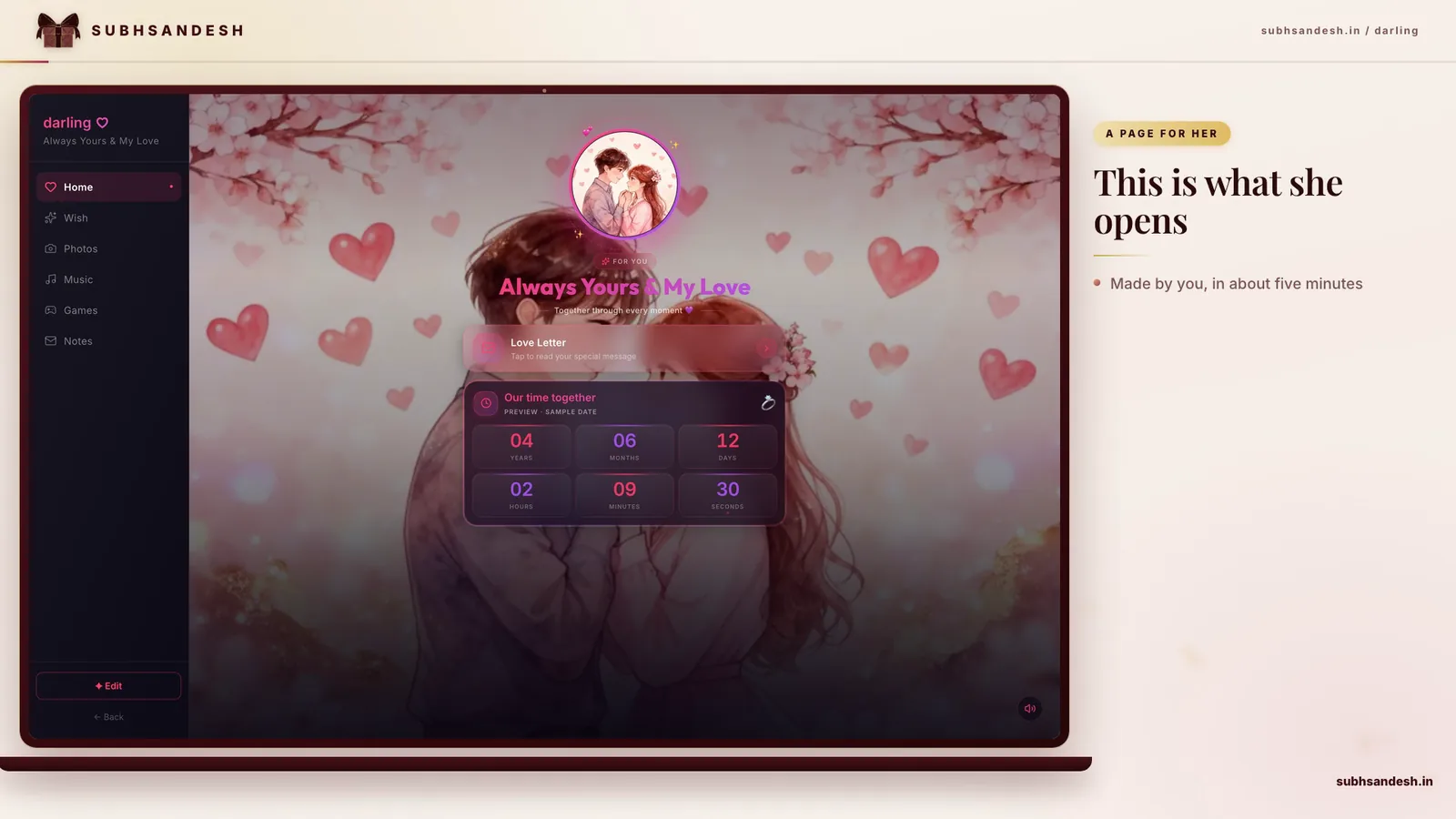
| Darling (/darling) | 6 | 343 — 10.3% |
| Birthday page (/birthday-gf) | 4 | 258 — 7.7% |
Privacy is the other pattern: 42.9% password-protect the page before sending the link (1,432 of 3,335), which for a Telugu letter usually means shared phones and family reading over shoulders.
If your letter is closer to number 3 or 6 in tone — heavier, more cinematic — the Darling romantic page is the darker template for that mood.
When a Telugu letter is the wrong choice
Dewaele's own data argues against this page: 354 of his 1,459 respondents, a quarter, felt "I love you" carried more weight in a later-learned language.
A 2013 PLOS ONE experiment with bilingual Polish students found they softened loaded words translating into their first language and strengthened them in their second — but only for insults aimed at social groups, so the authors concluded cultural norms drive the switch, not raw emotional power. If Telugu is the language your family's rules live in, English can be the freer place to be direct.
This next part is opinion, not research: if the two of you have always joked and argued in English, a sudden Telugu letter can read as performance rather than honesty. The language you are actually intimate in beats the one you were raised in.
Skip Telugu if English-medium schooling left her reading the script slowly, if her phone shows boxes instead of glyphs, or if you are in the same room.
Sources
- Dewaele, "The emotional weight of 'I love you' in multilinguals' languages", Journal of Pragmatics, 2008 — full text
- Toivo and Scheepers, "Pupillary responses to affective words in bilinguals' first versus second language", PLOS ONE, 23 April 2019
- Baumeister et al., "Embodiment and Emotional Memory in First vs. Second Language", Frontiers in Psychology, 23 March 2017
- Gawinkowska, Paradowski and Bilewicz, "Second Language as an Exemptor from Sociocultural Norms", PLOS ONE, 11 December 2013
First-party figures come from SubhSandesh's own database, measured 2026-09-01.
Frequently Asked Questions
Turn this inspiration into an unforgettable surprise
Build a page with photos, a heartfelt message, music and a ready-to-share link.
- Photos, message & music
- Ready-to-share link

Written by
Suyash Agrahari
Founder
Suyash Agrahari is a Software Engineer at HireQuotient and the founder of SubhSandesh and DrawFlow (drawflow.in). He builds AI agents and full-stack products with Next.js, Node.js, and the OpenAI and LangChain ecosystems, having shipped autonomous multi-agent systems, AI copilots, and large-scale outreach platforms — and scaled side projects from a few hundred to millions of users. He writes about AI engineering, web development, and building products that grow through SEO and organic reach.
Stay Connected
Follow SubhSandesh
New templates, festival ideas and step-by-step walkthrough videos — first on our socials.
Product guide
See it built, step by step

Keep reading
Which Day Comes After Propose Day, and What Happens Now
Chocolate Day comes after Propose Day — Tuesday 9 February 2027. That is one sentence, so this page covers the four situations you are actually in on …
 Suyash Agrahari· 9 min
When to Propose a Girl to Be Your Girlfriend, and When Not To
The timing question, answered with conditions instead of a date: what has to be true before you ask, what politeness and fast replies do not prove, wh…
Suyash Agrahari· 9 minRomantic Proposal Room Decoration: What the Room Must Do
Romantic proposal room decoration, sorted by the work each setup takes and what the room allows: 7 setups with set-up and reversal times, lighting evi…
Suyash Agrahari· 9 min